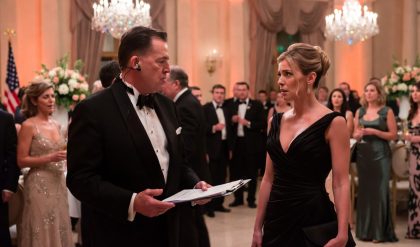
For five years, I had imagined this moment in different ways.
close
arrow_forward_ios
Read more
00:00
00:00
01:31
Sometimes Ethan would run toward me.
Sometimes he would deny everything.
Sometimes Victor would have security drag me out before anyone understood why I was there.
But I had never imagined my son Noah’s voice would be the thing that shattered the room.
“Mama… why does that man look so much like us?”
His twin brother, Oliver, tilted his head too, studying Ethan with the serious curiosity only a five-year-old can have.
Lily, my daughter, held my dress tighter.
And Grace, the youngest by six minutes but the fiercest of all four, whispered, “Is he family?”
The word family moved through the ballroom like a match dropped on silk.
I felt every eye on us.
The floral arch.
The white roses.
The string quartet that had stopped playing.
The champagne glasses frozen halfway to lips.
The bride standing at the altar in a gown that probably cost more than the house where I had raised my children.
And Ethan.
Ethan Harrison, the man I had once loved so deeply I thought love itself had taken human form.
He looked almost the same.
Older, sharper, dressed in a black tuxedo that fit like wealth had been sewn into it. But his eyes were the same. That stormy blue-gray that all four of my children had inherited in different shades.
He took one step forward.
Then another.
“Emma,” he said again, louder this time.
His voice cracked on my name.
Victor moved first.
Of course he did.
Men like Victor Harrison did not let silence belong to anyone else for long.
“This is not the time,” he said, his voice low but carrying across the front rows. “Whatever this is, it can be handled privately.”
Privately.
That word almost made me smile.
Five years ago, he had used private rooms, private agreements, private threats wrapped in polite sentences. He had built an entire lie behind closed doors.
Now he wanted privacy because the truth had found a public entrance.
I looked at him.
“No, Victor,” I said. “You had five years of privacy.”
A murmur passed through the guests.
The bride turned fully now.
Her name was Caroline Whitmore. I knew because every paper in Seattle had treated the wedding like a royal event. Harrison heir marries philanthropic heiress. Two powerful families. A union of legacy and influence.
She was beautiful.
Not cruel-looking.
Not smug.
Just stunned.
And suddenly, I felt a strange ache for her too.
Because she had also been placed inside a story without being told all the pages.
Ethan’s eyes never left the children.
“How old are they?” he asked.
His voice was barely above a whisper.
I swallowed.
“Five.”
His face twisted.
Five.
The number told him everything.
Noah raised his hand like he was in kindergarten.
“I’m Noah. This is Oliver. That’s Lily. That’s Grace. We’re quadruplets.”
Several guests gasped.
One woman pressed a hand to her mouth.
Caroline looked from Ethan to the children and back again.
“Ethan?” she said softly. “What is this?”
He did not answer her.
He couldn’t.
His eyes filled with a kind of horror I had once prayed he would feel and once feared would destroy him.
“Emma,” he said, “are they…”
“Yes.”
One word.
The entire wedding collapsed around it.
Caroline stepped back from the altar.
Victor came down the aisle with controlled fury in every line of his body.
“Stop this now,” he said. “You will not come into my family’s event and make accusations.”
“They are not accusations,” I said. “They are children.”
His jaw tightened.
“You signed an agreement.”
The guests heard that.
I saw it ripple through them.
Agreement?
Ethan turned slowly toward his father.
“What agreement?”
For the first time since I walked in, Victor looked uncertain.
Not afraid yet.
But close.
I reached into my purse with one hand, keeping Grace’s fingers wrapped in my other. I pulled out the folded copy I had kept for five years. The paper was worn at the edges. Not because I had handled it often, but because it had moved with us through every apartment, every hard year, every emergency folder.
I held it up.
“The agreement your father made me sign. The day he paid me one hundred twenty million dollars to leave your life forever.”
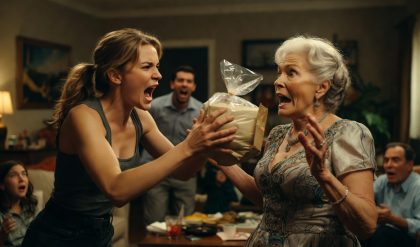
The ballroom erupted.
Voices.
Gasps.
Questions.
Someone dropped a glass.
Ethan stared at Victor.
“You did what?”
Victor’s expression became stone.
“I protected you.”
Ethan’s laugh was not laughter. It was pain breaking into sound.
“Protected me from what?”
Victor pointed at me.
“From being trapped by someone who saw your name before she saw you.”
The words struck like old poison.
Five years ago, they had almost worked.
I had been twenty-seven, pregnant, terrified, and alone in a room where everything was designed to make me feel small. Victor had called me ambitious without knowing I had been raised by a nurse who worked double shifts and a mechanic father who taught me how to fix a leaking sink before I knew how to curl my hair. He had called me unsuitable without asking what I had survived. He had called love a phase and money a solution.
Back then, I had taken the check.
Not because I believed him.
Because I understood something he didn’t.
A woman with four unborn children does not get to choose pride over survival.
I looked at Ethan.
“I tried to call you,” I said.
His face changed.
Victor said sharply, “Emma.”
I ignored him.
“I called you for three weeks after that meeting. Your number was disconnected. Your apartment was empty. Your email bounced. When I went to the building, they said you had gone to London.”
Ethan shook his head slowly.
“No. I was in rehab.”
The room went quiet again.
Victor closed his eyes for half a second.
There it was.
Another hidden room in the house of Harrison lies.
Ethan looked at his father.
“You told me she took the money and left.”
Victor’s silence was answer enough.
Caroline covered her mouth.
“Ethan…”
He looked sick.
Not embarrassed.
Not guilty of betrayal.
Sick with revelation.
“When I got out,” he said, staring at me, “they told me you were gone. My father said you signed papers. He showed me a copy. I thought…” His voice broke. “I thought you chose the money.”
“I did take the money,” I said.
His eyes lifted to mine.
I would not lie.
Not now.
Not ever again.
“I took it because I was pregnant with four babies, Ethan. I had no family wealth, no safety net, no lawyer in that room, and no idea whether the Harrison family would try to take them from me if you weren’t there to stop it. Your father thought he was buying my disappearance. I used his money to make sure your children would never be hungry.”
The words landed hard.
Victor’s face flushed.
I continued.
“I built college funds. I bought a modest house outside Portland. I paid medical bills. I hired help when I had four newborns and two hands. I started a business. Every dollar became protection. Not luxury. Protection.”
Noah tugged my hand.
“Mama, are we in trouble?”
I knelt immediately, ignoring the entire ballroom.
“No, sweetheart. You are not in trouble.”
Lily’s lower lip trembled.
“Did we do something wrong?”
“No, baby. Never.”
Grace glared at Victor with the natural suspicion of a child who knows exactly when adults are making her mother unhappy.
“I don’t like him,” she announced.
A few nervous laughs broke out and died quickly.
Oliver, always quiet, looked at Ethan.
“Are you our dad?”
Ethan looked like the question physically hit him.
He dropped to one knee in the aisle, still several feet away, as if he knew he had no right to come closer without permission.
His eyes were full.
“I think I am,” he whispered. “I didn’t know about you.”
Oliver considered this.
“Why not?”
The simplicity of it destroyed him.
Ethan lowered his head.
“Because grown-ups made terrible mistakes.”
Victor snapped, “Ethan, stand up.”
Ethan did not move.
For the first time, the son did not obey the father.
That was when I knew this day had become bigger than me.
Caroline stepped down from the altar, slowly, carefully, gathering her dress in one hand. She came toward Ethan, but stopped beside him instead of touching him.
“Did you know?” she asked him.
Ethan looked up at her.
“No.”
She searched his face.
Whatever she saw there hurt her.
But she believed him.
Then she looked at me.
“Did you come here to stop the wedding?”
The room waited.
I could have said yes.
I could have become the villain they wanted. The poor ex, the secret mother, the woman who arrived with children like weapons.
But my children were not weapons.
They were people.
“No,” I said. “I came because my children are old enough to ask questions I can’t answer alone anymore. I came because I found out about this wedding and realized that if I waited one more year, one more month, one more excuse, I would be helping the lie. I didn’t come to humiliate you.”
Caroline’s eyes filled, but she held herself upright.
“No one told me he had a past with you.”
“That doesn’t surprise me.”
Her gaze flicked to Victor.
“Nothing should surprise me today, apparently.”
Victor stepped closer.
“This is absurd. We are not having a family tribunal in the aisle.”
I stood again.
“You’re right about one thing. This is not a tribunal. It is a beginning.”
He gave a short, cold laugh.
“Beginning of what? A claim? More money? Is one hundred twenty million not enough?”
Ethan rose so fast the children flinched.
“Do not speak to her like that.”
Victor stared at him.
“Careful.”
“No,” Ethan said. “You be careful. You lied to me. You hid my children. You let me grieve a woman you told me abandoned me.”
Victor’s mouth tightened.
“You were unstable. You were drinking yourself to death. You were throwing away your future over a waitress from a hotel bar.”
There it was again.
A waitress.
Not Emma.
Not the woman Ethan loved.
Not the mother of his grandchildren.
A job title used like a stain.
I felt Grace’s hand tighten around mine.
Ethan’s face hardened.
“I was grieving Mom.”
The room stilled.
Ethan’s mother had died six months before Victor’s meeting with me. I had known that grief. I had held Ethan through nights when he shook from missing her. I had watched him drink too much, sleep too little, and try to stand straight under a father who believed sadness was weakness.
Victor said, “And I did what was necessary.”
“No,” Ethan said. “You did what was convenient for you.”
Victor’s eyes flashed.
“Everything you have exists because of me.”
“Then maybe that’s the problem.”
Caroline took a step back.
She was no longer just a bride.
She was a witness.
A photographer near the side had lowered his camera, pale and unsure whether capturing this would be career-making or career-ending.
Then a small voice broke the tension.
Lily said, “Mama, can we go home?”
That was enough.
I looked at Ethan.
“We need to leave. This was a mistake.”
“No,” he said quickly. “Please. Don’t disappear again.”
Something in me recoiled.
Disappear.
The word had teeth.
“I didn’t disappear,” I said. “I was pushed out.”
“I know. I know that now.” His eyes moved over the children, hungry and devastated. “Please. Let me talk to you. Not here. Not like this.”
Victor said, “Ethan, if you walk away from this altar, you will regret it.”
Ethan looked at Caroline.
That was the cruelest moment.
Because she had done nothing to deserve it.
She stood in her wedding dress, surrounded by flowers and cameras and guests who had come to watch her future begin. Instead, she was watching it unravel because powerful men had built it on missing truth.
Ethan said softly, “Caroline…”
She held up one hand.
“Don’t apologize yet. Not until you understand what you’re apologizing for.”
He swallowed.
She turned to me.
“Take your children somewhere quiet. I need to breathe too.”
Then she faced the room.
“The ceremony is postponed.”
A collective gasp rose.
Victor moved toward her.
“Caroline, let us handle this with dignity.”
She looked at him as if seeing him clearly for the first time.
“Dignity would have been telling the truth before I put on this dress.”
Then she walked down the aisle alone.
Not running.
Not crying loudly.
Walking like a woman refusing to collapse for other people’s comfort.
I respected her then.
More than I expected to.
Ethan followed me outside into a side garden with marble benches, trimmed hedges, and white flowers arranged for wedding photos that would never be taken. My children clustered around me. They were overstimulated, confused, and quiet in that alarming way children become when adult tension is too big for the room.
Ethan stopped several feet away.
He seemed afraid to come closer.
Good.
He should have been.
I knelt again.
“Kids, this is Ethan.”
Noah asked, “The man who looks like us?”
“Yes.”
Oliver said, “Is he our dad or not?”
I closed my eyes briefly.
“We need to do a test to be official.”
Grace frowned.
“A spelling test?”
Despite everything, Ethan choked on a laugh that became a sob.
“No,” he said gently. “A science test.”
Lily looked at him.
“Are you nice?”
The question made him freeze.
“I hope I can be.”
“That’s not the same,” she said.
“No,” he admitted. “It isn’t.”
Smart girl.
That was my Lily.
I stood.
“I’m not making promises today.”
Ethan nodded quickly.
“I know.”
“You don’t get to walk into their lives because you feel guilty.”
“I know.”
“You don’t get to buy your way in.”
“I know.”
“You don’t get to take them from me.”
His face changed sharply.
“I would never.”
“Your father would.”
He looked back toward the building.
For the first time, I saw fear in him.
Not fear of Victor.
Fear of recognizing Victor.
“Then I’ll make sure he can’t.”
“You said that once,” I said before I could stop myself.
Pain crossed his face.
“I failed you.”
The honesty shook me more than excuses would have.
He looked at the children.
“I failed all of you before I knew you existed. That doesn’t make sense, but it feels true.”
I looked away.
I had spent five years building a life where I did not need those words.
Now that I heard them, I didn’t know where to put them.
Ethan reached into his jacket and pulled out his phone.
“I want to give you my number. My real number. No assistants. No family office. Just me.”
I stared at the phone.
Five years ago, I would have taken it with shaking hope.
Now I took it with caution.
“I’ll call when I’m ready.”
He nodded.
“Okay.”
Noah stepped closer to Ethan, still holding my hand.
“Do you like pancakes?”
Ethan blinked.
“Yes.”
Noah looked at me.
“He can’t be too bad.”
Oliver said, “Lots of bad people like pancakes.”
That made Ethan smile through tears.
“You’re right. That was not enough evidence.”
My heart cracked a little.
Not for the man.
For the life that could have been ordinary.
Pancakes. Questions. First steps. Birthday candles. A father learning the difference between Noah’s laugh and Oliver’s silence, between Lily’s tenderness and Grace’s fire.
All of it stolen.
Not by fate.
By control.
We left before Victor could reach us.
Outside the hotel, reporters had already begun gathering. Someone had posted something. Of course they had. A billionaire wedding interrupted by a woman and four children was too bright a scandal for the world to ignore.
I put sunglasses on the kids, not because it helped much, but because it made them giggle.
We got into the car I had rented under my assistant’s name.
As we pulled away, Lily asked, “Mama, are we famous now?”
“No,” I said firmly. “We are going home.”
Grace said, “Good. I don’t like rich flowers.”
I laughed for the first time that day.
When we reached our hotel, I ordered grilled cheese, tomato soup, and chocolate milk from room service. The children ate on the floor in pajamas, calming slowly. After baths and two bedtime stories, they fell asleep in a tangled pile across the king bed, four small bodies who had no idea their existence had just shaken one of the richest families on the West Coast.
I stood by the window, looking at Seattle’s lights through the rain.
Then my phone buzzed.
Unknown number.
I knew it was Victor before I answered.
“You made a mistake today,” he said.
His voice was colder than I remembered.
“No, Victor. Five years ago, I made a choice. Today I corrected a lie.”
“You think public sympathy protects you?”
“I think records protect me.”
A pause.
“What records?”
“The agreement. The payment transfer. My medical records. Messages I sent Ethan that never reached him. The original ultrasound dated before your check cleared. The trust documents for the children. Everything.”
His breathing changed.
I continued.
“I spent five years raising four children, Victor. Did you think I didn’t learn how to prepare for disaster?”
“You took my money.”
“Yes. And I used it better than you ever would have.”
“You signed away contact.”
“I signed under pressure while pregnant and without independent counsel. Also, your agreement never mentioned children because you didn’t know they existed.”
Silence.
That silence was the sound of a man realizing he had bought a door without checking what was behind it.
He said, “If you try to attach them to the Harrison name, I will fight.”
I looked at my sleeping children.
“You can fight the truth if you want. But you won’t fight it in the dark anymore.”
I hung up.
Then I called my lawyer.
Her name was Denise Monroe. She had been with me since the children were six months old, when I realized money could protect you only if you learned how law worked. Denise was sixty, sharp, patient, and allergic to rich men who confused power with intelligence.
She answered with, “I saw the news.”
“Already?”
“Honey, the internet outran dignity years ago.”
I sighed.
“Victor called.”
“Of course he did. Did he threaten you?”
“In his way.”
“Good. He’s nervous.”
“That’s good?”
“Nervous men make mistakes.”
The next morning, Ethan called.
I didn’t answer.
He sent one message.
“I won’t push. I’m here. I’m sorry.”
I stared at it for a long time.
Then I put the phone down and made breakfast.
The children deserved normal.
Normal that morning meant cereal, banana slices, and Grace declaring that hotel spoons were “too shiny.”
By noon, Denise had arranged a private paternity test through legal channels. Ethan agreed immediately. No conditions. No delays. No press.
Victor tried to intervene.
Ethan refused him.
That refusal became the first brick in a new structure I did not yet trust.
The test happened two days later in a private clinic.
Ethan arrived alone.
No lawyer army.
No father.
No cameras.
He wore jeans and a gray sweater, and he looked like he hadn’t slept since the wedding. The children hid behind me at first.
Then Noah asked, “Did you bring pancakes?”
Ethan looked horrified.
“I didn’t. I should have.”
Oliver shook his head.
“Bad first move.”
Ethan nodded seriously.
“You’re right. I’ll remember.”
Grace crossed her arms.
“What do you do?”
Ethan crouched so he wasn’t towering over them.
“I help run a company that makes clean energy systems.”
She frowned.
“That sounds boring.”
“It often is.”
Lily asked, “Do you have a dog?”
“No.”
“That’s sad.”
“It is starting to feel sad.”
They studied him like a committee.
Then the nurse called us in.
The swabs took minutes.
The waiting took three days.
During those three days, the world turned our lives into content.
Headlines exploded.
SECRET CHILDREN AT HARRISON WEDDING.
MYSTERY WOMAN RETURNS WITH QUADRUPLETS.
BILLIONAIRE FAMILY SCANDAL.
Some called me brave.
Some called me a gold digger.
Some said I had timed it for maximum damage.
They were wrong about one thing.
Maximum damage would have been easy.
I could have sold the story.
I could have leaked the agreement.
I could have named the hotel room where I cried over the ultrasound.
I could have shown the world every cruel sentence Victor ever wrote through his lawyers.
I didn’t.
Not because they deserved mercy.
Because my children deserved a mother who did not confuse exposure with healing.
The results came on a rainy Friday.
Denise called me first.
“You sitting down?”
My throat tightened.
“Yes.”
“Ethan Harrison is the biological father of all four children.”
I closed my eyes.
Even though I knew, the official truth still changed the air.
“Okay,” I whispered.
“You okay?”
“No.”
“That’s also okay.”
I told the children that afternoon in the backyard of our Portland home.
Not dramatically.
Not with adult words.
I sat on the grass while they chased bubbles.
When they finally collapsed around me, I said, “The science test came back.”
Oliver sat up immediately.
“Did he pass?”
I smiled sadly.
“Yes. Ethan is your dad.”
Noah whispered, “For real?”
“For real.”
Lily leaned against me.
“Do we have to leave you?”
The question pierced me.
“No. Never. Nobody is taking you from me.”
Grace’s eyes narrowed.
“What if the scary grandpa tries?”
I pulled her into my lap.
“Then he learns your mother has lawyers.”
Grace nodded, satisfied.
“Good.”
Ethan visited one week later.
Not at my house first.
At a park.
Neutral ground.
Denise’s idea.
Mine too.
He arrived carrying four paper bags.
Pancakes.
Noah forgave him immediately.
Oliver inspected the containers before approving.
Lily asked if he had gotten syrup.
Grace asked if he had brought the scary grandpa.
“No,” Ethan said. “And I won’t.”
That earned him one point.
Not trust.
A point.
The first visit lasted one hour.
He pushed swings.
Answered questions.
Let Grace beat him at tic-tac-toe even though she accused him of “fake losing.”
At the end, he looked at me with tears in his eyes.
“Thank you.”
“Don’t thank me yet.”
“I know.”
“Consistency matters more than emotion.”
He nodded.
“I’ll be consistent.”
“You don’t know how hard that is with four children.”
“No,” he said. “But I want to learn.”
And he did.
Slowly.
Awkwardly.
Imperfectly.
He came every Saturday at first. Then Wednesday afternoons too. He learned that Noah needed reminders but not pressure, that Oliver hated being interrupted, that Lily collected leaves and gave them personalities, and that Grace tested every adult by being impossible until they proved they would not leave.
He failed sometimes.
Once, he canceled because of an emergency board meeting and Grace didn’t speak to him for two visits.
Instead of buying her a gift, he apologized.
On her level.
With no excuse.
“I should have told you sooner. I made you feel unimportant. I’m sorry.”
Grace stared at him.
Then said, “You can push me on the swing.”
That was forgiveness in her language.
The first real storm came from Victor.
He filed a petition.
Not for custody exactly.
For “family access consideration,” wrapped in legal language that smelled like control.
Denise laughed when she read it.
“Cute.”
I was not amused.
“Can he win?”
“He can spend money. That is not the same as winning.”
Ethan called me before I called him.
“I didn’t know he filed. I swear.”
“I believe you,” I said, surprising myself.
“I’ll oppose it.”
“He’s your father.”
“They’re my children.”
The sentence landed quietly.
Not as possession.
As choice.
True to his word, Ethan filed a declaration against Victor’s petition. In it, he stated that Victor had knowingly interfered in his relationship with me, misrepresented facts, concealed my attempts at contact, and had no established relationship with the children. He requested that any future contact with Victor happen only if recommended by a child psychologist and approved by me.
Victor went nuclear.
He removed Ethan from two boards.
Threatened inheritance.
Froze family accounts.
Leaked old stories about Ethan’s addiction struggles.
That last one hurt Ethan deeply, but it also changed something. People who had been unsure began seeing Victor not as a protective patriarch, but as a man willing to burn his own son to stay in control.
Caroline reappeared during the legal fight.
She asked to meet me privately.
I almost said no.
Curiosity won.
We met at a quiet tea room in Seattle. She wore no engagement ring.
“I owe you an apology,” she said.
I blinked.
“You owe me?”
“I believed the version of you they gave me. Not loudly. Not cruelly. But I accepted it because it was convenient.”
“That family is good at convenient stories.”
She smiled sadly.
“Yes.”
There was a pause.
Then she said, “I’m not marrying Ethan.”
I looked down at my tea.
“I’m sorry.”
“I am too. But not because the wedding stopped. Because I almost married into a house where truth is treated like a threat.”
She opened her purse and slid an envelope toward me.
“What is this?”
“Copies of emails Victor’s office sent my family after the wedding. They wanted us to make a united statement blaming you.”
My stomach tightened.
“What did you say?”
“I said no.”
Inside were printed emails. Carefully worded. Vicious beneath the polish. They suggested framing me as unstable, financially motivated, possibly manipulative.
Caroline’s voice softened.
“I thought you should have them.”
I stared at her, unexpectedly moved.
“Thank you.”
She stood to leave, then stopped.
“For what it’s worth, Ethan loved you. I know because after you walked in, I realized he had never looked at me like that.”
There was no bitterness in her voice.
Only grief.
I said, “You deserve someone who does.”
She nodded.
“So do you.”
I didn’t answer.
Because the dangerous thing was, part of me still wanted that someone to be Ethan.
The case with Victor lasted six months.
Six months of filings, hearings, interviews, and headlines.
Six months of trying to protect the children from adult ugliness while also answering their growing questions.
“Why doesn’t Grandpa Victor like us?”
“Is Dad rich?”
“Are we rich?”
“Why did Mama cry when she saw the papers?”
“Can people buy people?”
That last question came from Oliver.
I sat with him at the kitchen table while the others colored.
“No,” I said. “People can try. But they can’t own someone’s heart or choices.”
He thought about that.
“Did Grandpa Victor try to buy you?”
I took a slow breath.
“Yes.”
“Did it work?”
I looked around our home.
At the drawings on the fridge.
The muddy shoes by the back door.
The four backpacks.
The life I had built from fear, love, and stubbornness.
“No,” I said. “It helped us survive. But it did not buy me.”
The judge dismissed Victor’s petition.
Not politely.
Firmly.
The order stated that Victor Harrison had no legal or emotional standing to demand access and that any attempt to contact the children without parental consent would be considered harassment.
Victor left the courthouse through a side door.
For once, he did not speak to reporters.
Ethan stood beside me on the courthouse steps while the children were home with my friend Maria.
“He won’t stop forever,” I said.
“No,” Ethan replied. “But he lost something today.”
“What?”
“The assumption that everyone moves when he points.”
I looked at him.
He looked tired.
Different.
The polished Harrison heir was still there, but something had cracked open. Something humbler had begun growing through.
“I’m sorry you lost so much,” I said.
He shook his head.
“I lost things I should have questioned a long time ago.”
That night, he came over for dinner.
It was the first time he entered our home.
The children gave him a tour like they owned a museum.
“This is where Grace spilled paint.”
“This is Lily’s leaf hospital.”
“This is the couch where Noah threw up but Mama cleaned it.”
“This is Oliver’s drawer and nobody touches it or he gets weird.”
“I do not get weird,” Oliver said.
“You do,” Grace replied.
Ethan looked overwhelmed and happy in a way that frightened me.
After dinner, he helped wash dishes.
The sight of Ethan Harrison, billionaire heir, standing in my modest kitchen with dish soap on his sleeves, almost made me laugh.
“What?” he asked.
“Nothing.”
“You’re smiling.”
“You’re washing a plastic dinosaur cup very seriously.”
“It has peanut butter inside the tail. This is advanced work.”
I laughed then.
A real laugh.
The sound startled both of us.
For a moment, the kitchen softened.
Five years disappeared.
Then returned.
He set the cup down.
“Emma.”
I knew that voice.
I dried my hands.
“Don’t.”
“I still love you.”
The words hung between us.
I had wanted them once more than oxygen.
Now they terrified me.
“You don’t know me anymore.”
“I know.”
“You love a memory.”
“I love the woman who walked into a ballroom with four children and told the truth with shaking hands.”
“My hands weren’t shaking.”
“Yes, they were.”
I looked away.
He stepped back, giving me space.
“I’m not asking for anything tonight. I just needed to say it once without my father’s lies between us.”
My eyes burned.
“I spent years being angry at you.”
“You should have.”
“I needed you.”
“I know.”
“You didn’t come.”
His face crumpled.
“I was broken, Emma. That is not an excuse. It is the truth. And when I came back to myself, they had built a wall so high I mistook it for your choice.”
I pressed a hand to my mouth.
He continued, voice rough.
“I should have climbed it anyway.”
That was the sentence.
Not I didn’t know.
Not my father lied.
Not I was hurt too.
I should have climbed it anyway.
I cried then.
Not neatly.
Not romantically.
I cried for the girl in Victor’s office, for the woman in the hotel with an ultrasound, for the mother counting newborn diapers at three in the morning, for the four children who had deserved two parents from the beginning.
Ethan did not touch me until I nodded.
Then he held me.
Carefully.
Like a man holding something he had already lost once and knew he had no right to grip too tightly.
We did not get back together that night.
Real healing is not a movie scene.
It is not one confession, one hug, one kitchen full of soft light.
For the next year, we built something slower than romance.
A parenting schedule.
Shared school events.
Therapy for the kids.
Therapy for Ethan.
Therapy for me, which I pretended I didn’t need until Grace asked why Mama always got quiet after phone calls from lawyers.
We attended birthdays together.
Sat on opposite ends of school plays.
Argued about bedtime.
Agreed on dentist appointments.
Learned the strange intimacy of raising children before relearning each other.
Ethan bought a house fifteen minutes away instead of trying to move us into one of his family estates. That mattered.
He kept showing up.
That mattered more.
When Noah broke his arm jumping from a couch he had been told not to jump from, Ethan beat me to the emergency room by six minutes and looked so pale the nurse brought him juice too.
When Lily had a nightmare that “the flower wedding people” were taking her, Ethan sat outside her bedroom door for two hours because she wanted him close but not inside.
When Oliver won a science fair, Ethan cried harder than I did.
When Grace told him, “You can come to Father’s Day, but don’t make it weird,” he wore a tie she picked out with cartoon ducks on it and acted like it was couture.
Little by little, the children stopped calling him Ethan.
Noah was first.
“Dad, look!”
He said it while riding a bike, too fast and without thinking.
Ethan froze so completely he almost got hit by Grace on a scooter.
Noah didn’t notice.
But I did.
Ethan looked at me.
I looked back.
Neither of us said anything.
Some moments are too sacred for commentary.
Victor watched from a distance, or tried to.
He sent gifts. We returned them.
He sent letters. Denise answered.
He tried donating to the school. The school returned the check.
Then, one winter morning, Ethan received a handwritten letter.
Not from Victor’s office.
From Victor himself.
Ethan read it, then brought it to me.
“Do you want to see?”
“No.”
He nodded.
Then sat at my kitchen table, the same place where the dinosaur cup incident had happened, and said, “He says he wants to apologize.”
I folded a towel slowly.
“To you or to the children?”
“To all of us.”
“What do you think?”
Ethan looked older than thirty-six in that moment.
“I think he is sick.”
I stopped.
“How sick?”
“Heart condition. Serious.”
There it was.
The oldest complication in the world.
Mortality.
It does not erase harm.
But it changes the clock.
“I’m sorry,” I said.
“I don’t know if I am,” Ethan admitted.
The honesty was painful.
We did not bring the children to Victor.
Not then.
First, Ethan went alone.
He returned quiet.
“He cried,” he said.
“Do you believe him?”
“I believe he regrets losing.”
That sentence told me everything.
Months passed.
Victor’s health declined.
His lawyers became less aggressive. His public appearances stopped. The Harrison empire began shifting under Ethan’s leadership, and to his credit, Ethan changed things. Not dramatically for headlines. Structurally. He removed men who operated like Victor. He created transparency policies. He stepped back from ventures built on intimidation. Investors complained. Newspapers speculated. Ethan kept going.
One evening, Oliver came home from school with a family tree assignment.
He placed it on the table and said, “Do we put Grandpa Victor?”
The room went still.
The other three looked at me.
I sat down.
“That is your choice.”
Grace said, “He was mean.”
Lily said, “But he is Dad’s dad.”
Noah said, “Can someone be family and not safe?”
Ethan, who had come for dinner, closed his eyes.
I answered carefully.
“Yes. And when that happens, we can tell the truth without giving them power over us.”
Oliver drew the tree.
He put Victor’s name in small letters.
Not connected with a bright line like the rest.
Just there.
A fact.
Not a home.
A year and a half after the wedding that never happened, Victor Harrison died.
The funeral was private.
The children did not attend.
Ethan did.
I went with him, not for Victor, but for the man Ethan was still becoming. Caroline was there too, standing near the back. She had married no one. She had started a foundation for legal support for women pressured by wealthy families. When she saw me, she hugged me.
“Look at us,” she whispered sadly. “Survivors of the same almost-family.”
After the funeral, Victor’s will made news.
He had left most of the Harrison estate to a charitable trust and divided a portion among his grandchildren.
All of them.
Including mine.
There was also a sealed letter for me.
I waited a month before opening it.
It was short.
“Emma,
I thought money could solve what fear created. I was wrong.
I do not ask forgiveness. I know enough now to understand that asking would be another form of taking.
I stole years from my son and from your children. I called it protection because I was too proud to call it control.
The money I gave you was the only decent thing I did, and even that was done for the wrong reason.
You used it to build what I tried to prevent: a family beyond my reach.
Victor Harrison.”
I read it once.
Then I put it away.
Not in the children’s memory boxes.
Not with legal papers.
In a drawer with things that belonged to the past but did not deserve the power to live in the present.
Two years after the wedding, Ethan asked me to marry him.
Not at a gala.
Not in a restaurant.
Not in some dramatic place that would turn our history into a performance.
He asked in our backyard after the children had destroyed a picnic by starting a water balloon war.
I was barefoot. My hair was damp. Grace had drawn a star on Ethan’s cheek with washable marker. Noah and Oliver were arguing over who had cheated. Lily was making a crown out of weeds.
Ethan looked at the chaos and laughed.
Then he looked at me.
And suddenly I knew.
“Oh no,” I said.
He smiled.
“Oh yes.”
“Ethan.”
“I had a speech.”
“Of course you did.”
“Grace spilled lemonade on it.”
Grace shouted from across the yard, “It was an accident!”
“It was not,” Oliver said.
Ethan took my hand.
“I loved you when I was too weak to fight correctly. I lost you because I trusted the wrong people and doubted the right thing. You built a life for our children when I wasn’t there. You owe me nothing. Not love. Not a second chance. Not this family. But if you want me, I will spend the rest of my life choosing you loudly enough to make up for every silence that hurt you.”
I cried before he finished.
“You can’t make up for every silence.”
“I know.”
“But you can keep choosing.”
“I will.”
The children had gone quiet.
Rare miracle.
Lily whispered, “Is this the marrying part?”
Grace said, “If Mom says no, can we still have cake?”
I laughed through tears.
Then I looked at Ethan.
“Yes.”
The children screamed.
Not politely.
Not romantically.
Like wild animals.
Noah tackled Ethan’s legs. Oliver asked if the ring was insured. Lily cried because Lily always cried when anyone else cried. Grace demanded to be in charge of the wedding rules.
We married six months later.
Small.
Backyard.
No society pages.
No champagne tower.
No white roses pretending nothing had happened.
Caroline came and brought flowers.
Denise officiated because Grace insisted “the lawyer lady should make it official.”
Maria cried.
The children walked me down the aisle together.
Four small hands.
The same four hands I had held when I walked into Ethan’s almost-wedding.
But this time, no one stared in horror.
No one whispered scandal.
No one tried to buy the ending.
Ethan stood under a wooden arch Noah and Oliver had helped build crookedly. Lily had tied ribbons to it. Grace had written a sign that said:
NO LYING AT THIS WEDDING.
Everyone laughed when they saw it.
I didn’t.
I kissed her forehead and told her it was perfect.
During his vows, Ethan said, “I promise never to let wealth become louder than truth.”
During mine, I said, “I promise not to punish the present for the past, but I also promise never to forget what the past taught me.”
That became the foundation of our marriage.
Not fairy-tale innocence.
Something better.
Earned trust.
Years later, people would still ask about the money.
What happened to the 120 million?
They wanted drama.
A secret mansion.
Revenge spending.
Luxury.
The truth was less shiny and more powerful.
Some of it built my children’s future.
Some of it built my business, a childcare and family support network for single parents working impossible hours.
Some of it funded legal aid for women pressured into silence by wealthy families.
Some of it remained invested carefully, because survival had taught me that financial security is not greed when you have children depending on you.
And one part, the part I loved most, created the Carter House Fund.
Emergency housing for mothers who needed one safe door between them and someone else’s control.
On opening day, I stood in front of a modest building with blue shutters while my children held the ribbon.
Ethan stood beside me.
Reporters came this time too.
But I was no longer the mystery woman at a wedding.
I was Emma Carter Harrison.
Mother.
Founder.
Woman who had once been paid to disappear and instead built something visible enough to shelter others.
A reporter asked, “Do you regret taking the money?”
I looked at my children.
Noah, tall for his age and still pancake-obsessed.
Oliver, serious and brilliant.
Lily, soft-hearted and brave.
Grace, fierce enough to frighten grown men with one eyebrow.
Then I looked at Ethan, who had learned that love without courage is only a feeling, not a promise.
“No,” I said. “I regret the lie that made it necessary. But I don’t regret surviving.”
That night, after the opening, we went home exhausted.
The children fell asleep in the living room after insisting they were not tired.
Ethan carried them one by one to bed.
I stood in the hallway watching him lift Oliver with careful arms, then Lily, then Noah, then Grace, who woke halfway and mumbled, “Don’t drop me, Dad.”
“Never,” he whispered.
When he came back, he found me crying.
“Happy tears?” he asked.
“Complicated tears.”
He nodded.
“We know those.”
We sat together on the couch in the quiet house.
Five years ago, I had sat alone in a hotel room with an ultrasound in my hands and no idea how I would survive.
Now the house was full of backpacks, drawings, sneakers, half-finished books, and four children who knew exactly where they belonged.
Ethan took my hand.
“Do you ever think about that day? The wedding?”
I leaned my head back.
“Sometimes.”
“Do you wish you had done it differently?”
I thought about Caroline’s face. The guests. The shock. The children’s confusion. Victor gripping the chair. Ethan hearing the truth in front of everyone.
“Yes,” I said honestly. “And no.”
He waited.
“I wish there had been a gentler way. But lies that big rarely open for a gentle knock.”
He squeezed my hand.
“I’m glad you walked in.”
“So am I.”
Outside, rain began tapping the windows.
Seattle rain.
The same sound that had followed me out of Victor’s office years earlier.
Back then, it sounded like loneliness.
Now it sounded like a closing circle.
People say money changes everything.
They are almost right.
Money can change addresses.
It can buy silence for a season.
It can build walls, hire lawyers, polish lies, and make cruel people feel untouchable.
But money cannot make children stop looking like their father.
It cannot erase a mother’s memory.
It cannot turn control into love.
And it cannot bury the truth forever.
Because truth grows.
Sometimes quietly.
Sometimes inside a woman everyone underestimated.
Sometimes into four little children with matching eyes, walking into a ballroom hand in hand.
And when truth finally enters the room, it does not need to shout.
It only has to ask one innocent question.
“Mama… why does that man look so much like us?”
That was the question that ended Victor Harrison’s lie.
But it was not the end of our story.
It was the beginning of a family finally built on something no billionaire could buy.
THE END.